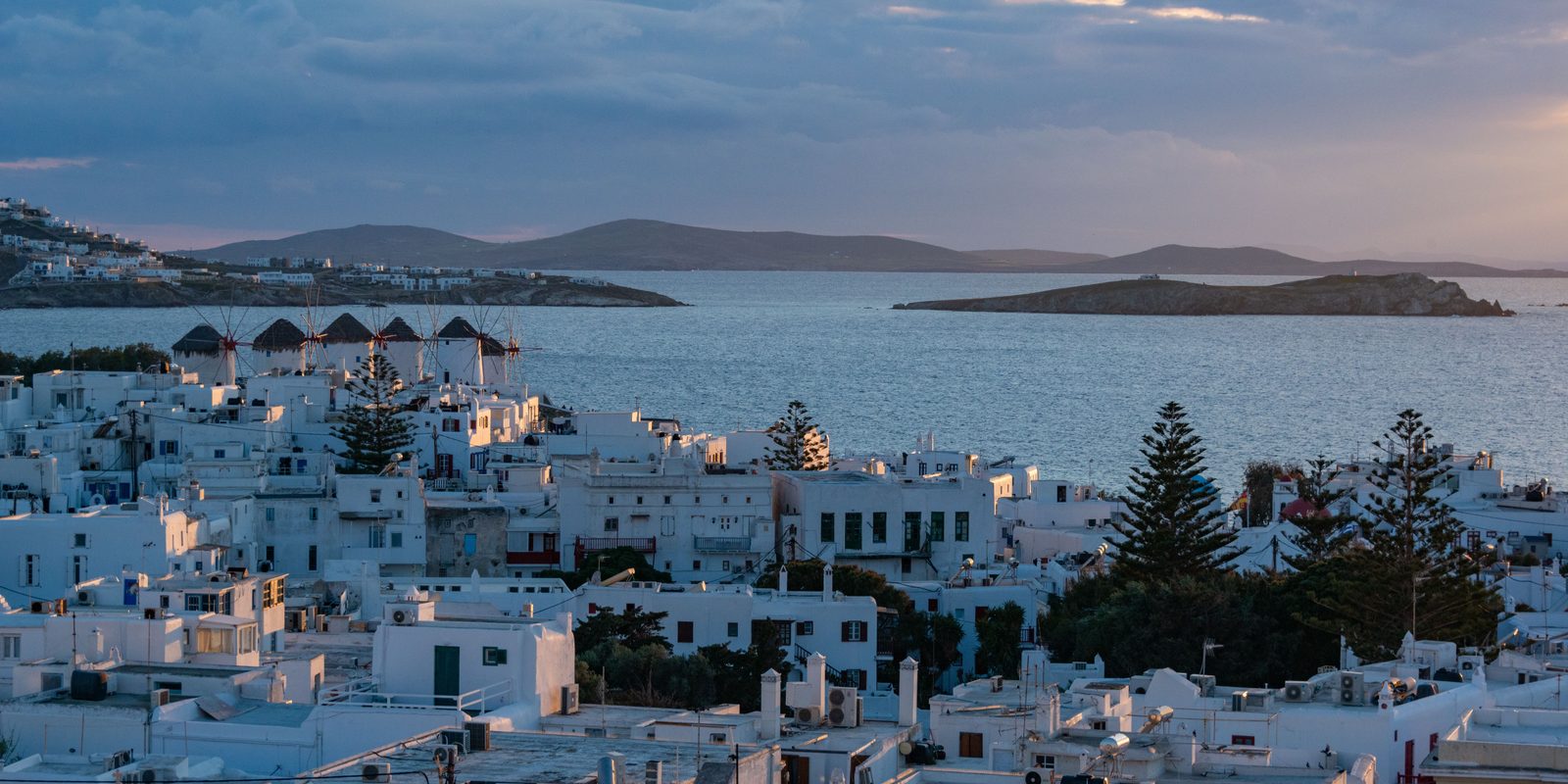
In most destinations the question is where to go. In Greece, it’s just as much when — because the weather, and which island is at its best, shifts through the season. The islands are warm and dry all summer, but the differences between the island groups, and between May and October, are big enough to make or break a trip.
So the best time to visit the Greek islands isn’t one date — it’s a match between the month you can travel and the island that shines in it. It’s the same idea as comparing the climate before you book, applied to one country. And the first thing to understand is that “the Greek islands” aren’t one climate — they’re several.
First, Know the Four Island Groups
Greece has a Mediterranean climate — hot dry summers, mild wet winters — but where you are changes the picture more than most travellers expect.
| Island group | Islands | Weather character |
|---|---|---|
| Cyclades | Santorini, Mykonos, Paros, Naxos | Bone-dry May–Oct, near-zero summer rain; cooled (and sometimes buffeted) by the Meltemi wind |
| Ionian | Corfu, Kefalonia, Zante, Lefkada | Lush and green — because they’re the wettest Greek islands; more spring/autumn rain, gentler winds |
| Dodecanese | Rhodes, Kos, Symi | Among the warmest and sunniest in Greece; long season, mild winters, less fierce winds |
| Crete | (its own south-Aegean world) | Best all-round average; longest warm season, spring to late October; windy, especially the south |
The single most useful takeaway: the Cyclades barely see rain all summer, while the Ionian islands are green precisely because they get more of it — so in the shoulder months, a dry Cycladic island can be a safer bet than a lush Ionian one.
Month by Month
| Month | The weather | Best island picks |
|---|---|---|
| April | Unsettled but warming; wildflowers, green landscapes; sea still cold | Crete & Rhodes (mildest); sightseeing, not yet beaches |
| May | Reliably fine, warm days, thinner crowds; sea ~19–20°C | Crete, Cyclades and Ionian all at their spring best |
| June | Warm, dry, season in full swing before peak crowds | Cyclades (Naxos, Paros); Mykonos before the rush |
| July–Aug | Peak heat (28–30°C+), peak crowds and prices; strongest Meltemi wind | Cyclades (the wind keeps them bearable); Ionian for calmer air |
| September | The sweet spot: warm sea (~24–25°C), easing crowds, calm | Almost everywhere — Santorini, Crete, the Cyclades |
| October | Mild (17–20°C), soft light, sea still balmy; rain returns late, first in the Ionian/north | Crete, Rhodes and the Dodecanese hold warmth longest |
| Nov–March | Quiet season; many islands largely close; January the rainiest | Rhodes or south-east Crete (mildest winters) if you go at all |
The Meltemi: the Wind That Shapes a Cyclades Summer
If you’re heading to the Cyclades in July or August, meet the Meltemi — a strong, dry north wind that sweeps the central Aegean at the height of summer. It’s a genuine double-edged sword: it keeps temperatures pleasant and the humidity low when the mainland is baking, but at full strength it whips up the sea, can make north-facing beaches uncomfortable, and occasionally disrupts ferries. It’s the reason Santorini and Mykonos rarely feel as oppressively hot as inland Greece — and a reason some travellers prefer the calmer Ionian or Dodecanese in peak summer. It eases through September.
When Is the Best Time to Visit the Greek Islands?
For most travellers, the two best windows are May–June and September — warm, far less crowded, and cheaper than the July–August peak. If your priority is the warmest possible sea for swimming, September beats May comfortably (about 24–25°C versus 19–20°C), because the water spends all summer warming up. If it’s green landscapes and wildflowers, May in the Ionian is hard to beat. And if you’re travelling in the shoulder months and want the lowest chance of a washed-out day, lean toward the dry Cyclades or southerly Crete and Rhodes rather than the rain-prone Ionian.
Two of these islands have their own detailed guides worth reading before you commit: Santorini and Crete.
TRAVELLER TIP
Match the island group to your month, not the other way round. For a September beach trip, almost any island delivers warm sea and thinner crowds. For July–August, the breezy Cyclades stay more comfortable than you’d expect — but pack for the Meltemi and don’t bank on calm ferry days. And for a shoulder-season trip (May or October), favour the dry Cyclades or southern Crete over the greener, wetter Ionian if reliable sunshine matters most.
Sources
- Hellenic National Meteorological Service — Greek climate (hnms.gr)
- Climates to Travel — Greece and the Greek islands (climatestotravel.com)
- Weather Atlas — Greek island monthly averages (weather-atlas.com)
- World Meteorological Organization — climate normals (wmo.int)
WorldWeatherTime provides climate averages, sea temperature and live conditions for destinations across Greece and worldwide. Search any island to compare your options and pick the right month.
Planning a Greek island trip?
Check live conditions, sea temperature and the seasonal outlook for any island