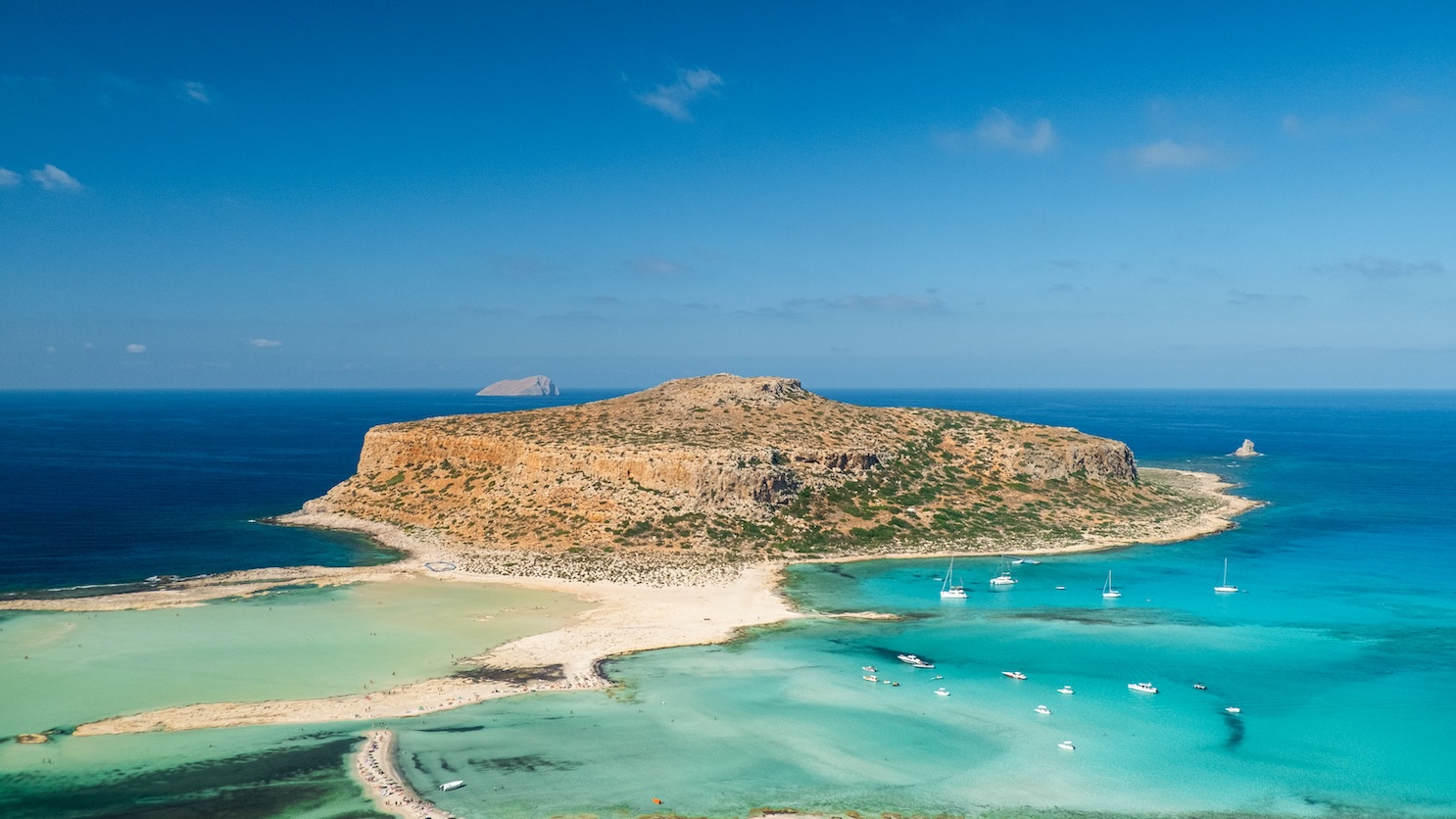
If Santorini is the island you visit for the sunset and the view, Crete is the one you visit for everything else — gorge hikes, Minoan ruins, mountain villages, and beaches that range from pink sand to palm forest. It’s the largest Greek island by far, and that size means its weather, and the kind of trip you can have, changes dramatically with the seasons.
Crete sits further south than any other major Greek island — closer to North Africa than to Athens — which gives it the longest, warmest summers in Greece and some of the mildest winters. The trade-off is a landscape that is semi-arid along the coast and genuinely alpine in the mountains, where snow lingers into spring. Knowing which Crete you’ll get in any given month is the difference between a perfect trip and a mistimed one.
Crete Weather at a Glance
| Month | Avg High | Avg Rain Days | Avg Sea Temp | Verdict |
|---|---|---|---|---|
| January | 15°C / 59°F | 11–13 | 16°C / 61°F | Coldest, wettest — snow in the mountains |
| February | 15°C / 59°F | 9–11 | 15°C / 59°F | Cool and quiet, almond blossom begins |
| March | 18°C / 64°F | 6–8 | 16°C / 61°F | Warming, green, uncrowded |
| April | 20°C / 68°F | 4–6 | 17°C / 63°F | Wildflowers, ideal for hiking |
| May | 24°C / 75°F | 3–5 | 20°C / 68°F | Excellent — warm, dry, sea swimmable |
| June | 28°C / 82°F | 0–2 | 23°C / 73°F | Hot, dry, sunny — beaches come alive |
| July | 30°C / 86°F | 0–1 | 25°C / 77°F | Peak heat — Meltemi winds, very busy |
| August | 30°C / 86°F | 0–1 | 27°C / 81°F | Hottest, busiest — warmest sea |
| September | 27°C / 81°F | 1–3 | 25°C / 77°F | Best all-rounder — warm, calmer, warm sea |
| October | 23°C / 73°F | 4–6 | 23°C / 73°F | Mild, sea still warm, first rains |
| November | 19°C / 66°F | 7–9 | 21°C / 70°F | Mild, quiet, season winding down |
| December | 16°C / 61°F | 10–12 | 18°C / 64°F | Wettest month, mild, very quiet |
These figures reflect the northern coast around Heraklion and Chania, where most visitors stay. The south coast runs a few degrees warmer and drier, and the mountains are a different climate entirely — worth remembering if your trip leans toward the interior.
Crete vs Santorini: A Different Kind of Island
Many travellers pair the two, and they reward very different instincts. Santorini is compact, dramatic and built around the view — the caldera, the sunsets, the blue domes. You go there to slow down and look. Crete is the opposite kind of trip: a vast island with a 2,400-metre mountain range, Europe’s longest gorge, Bronze Age palaces, and hundreds of beaches scattered across its coast — from pink sand to palm forest. You go there to explore and to swim. For a romantic few days framed around scenery, our Santorini weather guide covers the timing. For an active, beach-rich, culture-heavy trip where the weather decides whether you’re hiking, swimming or sheltering from the Meltemi, read on.
Spring (March–May): The Adventurer’s Season
Spring is when Crete is at its most rewarding for anyone who came to do more than lie on a beach. The island turns green, wildflowers carpet the hillsides, and daytime temperatures climb from a mild 18°C in March to a comfortable 24°C by May — warm enough to enjoy, cool enough to walk all day. This is the ideal window for the Samaria Gorge, the Minoan palace of Knossos, and the mountain villages, all of which become punishing in midsummer heat.
The sea is still cool in March and April (16–17°C) and warms to a swimmable 20°C by May. One Crete-specific caveat: the Samaria Gorge usually only opens in late April or early May, once snowmelt from the White Mountains has subsided, and the high mountains can stay cold and snow-streaked well into spring. Best for: hikers, history lovers, photographers, anyone who wants the island without the heat or the crowds.
Summer (June–August): Beaches, Heat and the Meltemi
Summer is Crete at full volume. June is the sweet spot — hot (28°C), dry, with a sea that has warmed to 23°C and crowds that haven’t yet peaked. July and August bring the island’s hottest weather, regularly 30°C and higher inland, with the warmest sea of the year (25–27°C) and the busiest beaches.
This is where Crete’s summer pulls decisively away from Santorini’s. Where Santorini’s beaches are a handful of dark volcanic pebble strips, Crete has hundreds of genuinely swimmable beaches across its long coastline — and some of the most striking in the Mediterranean. The pink sand and shallow turquoise water of Elafonisi, the lagoon at Balos, and the palm forest behind the beach at Vai are the kind of places you come to Crete specifically to swim, not just to photograph. In high summer, when the heat makes the gorges and ruins a chore, the water is the reason to be here — and it’s an experience Santorini simply can’t match.
Like the rest of the Aegean, Crete is swept by the Meltemi in high summer — a strong, dry northerly wind that blows hardest from July through August. On Crete it’s a mixed blessing: it takes the edge off the heat and keeps the air clear, but it can whip up the north-coast beaches and disrupt ferries to the smaller islands. The south coast is more sheltered when the Meltemi is blowing hard, which is useful local knowledge if your dates are fixed. If you do want to hike a gorge or visit Knossos in midsummer, start at first light — the sites offer little shade and midday heat can be genuinely dangerous. Best for: beach holidays, warm-sea swimming, families on school breaks — with active plans saved for the cool of early morning.
Autumn (September–October): The Best All-Rounder
The best time to visit Crete for warm-weather travel is September. Average highs of 27°C (81°F), the sea at its yearly warmest of 25°C (77°F), only one to three rain days, and the Meltemi fading make it the island’s best all-round month. If you want the best of both Cretes in a single trip, September is the month. The Meltemi fades, the heat eases to a very comfortable 27°C, the sea is at its warmest of the entire year (25°C, holding the summer’s stored heat), and the crowds thin once the European school holidays end. You can hike in the morning and swim in the afternoon without either being a trial.
October continues the reward — still mild at 23°C, the sea still warm at 23°C, and prices dropping noticeably — though the first proper rains usually arrive by mid-to-late month and the days shorten. It’s the connoisseur’s time to visit: warm enough for the beach, cool enough for the gorge, and quiet enough to feel like you have the island to yourself. Best for: couples, hikers, repeat visitors, anyone who wants beach and adventure in one trip.
Winter (November–February): The Island Locals Keep
Winter on Crete is a genuinely different island, and one most visitors never see. The coast stays mild by European standards — 15–16°C by day — but rain increases sharply, with December and January the wettest months, and the wind can make it feel colder than the thermometer suggests. Up in the mountains it’s a different world: snow blankets the White Mountains and Mount Ida, and the higher villages can be cut off for days.
It’s not beach weather, but it has its own appeal — green hillsides, almond blossom from February, working tavernas full of locals rather than tourists, and archaeological sites you can wander almost alone. Many seasonal hotels and resorts close from November to March, so plan around the towns that stay open year-round, such as Chania and Heraklion. Best for: budget travellers, culture seekers, anyone curious about the real, lived-in Crete.
TRAVELLER TIP
For the best of both the beach and the island’s adventures in one trip, aim for late May or September — warm seas, manageable heat, and conditions kind enough to hike the gorges and explore the ruins. If you’re set on July or August, base yourself on the more sheltered south coast when the Meltemi is blowing, and tackle any hiking or sightseeing in the early morning before the heat builds.
Sources
- Climates to Travel — Crete climate and seasonal overview (climatestotravel.com)
- Weather Atlas / Weather2Travel — Crete (Heraklion) monthly averages (weather2travel.com)
- Cretan Beaches — Crete climate and sea temperatures (cretanbeaches.com)
- Holiday Weather — Crete monthly averages (holiday-weather.com)
- Hellenic National Meteorological Service — Aegean climate data (hnms.gr)
WorldWeatherTime provides live conditions, sea temperature, UV index and 5-day forecasts for cities worldwide. Search your destination to plan smarter around the weather.
Check live weather in Crete right now
Real-time conditions, sea temperature and hourly forecast