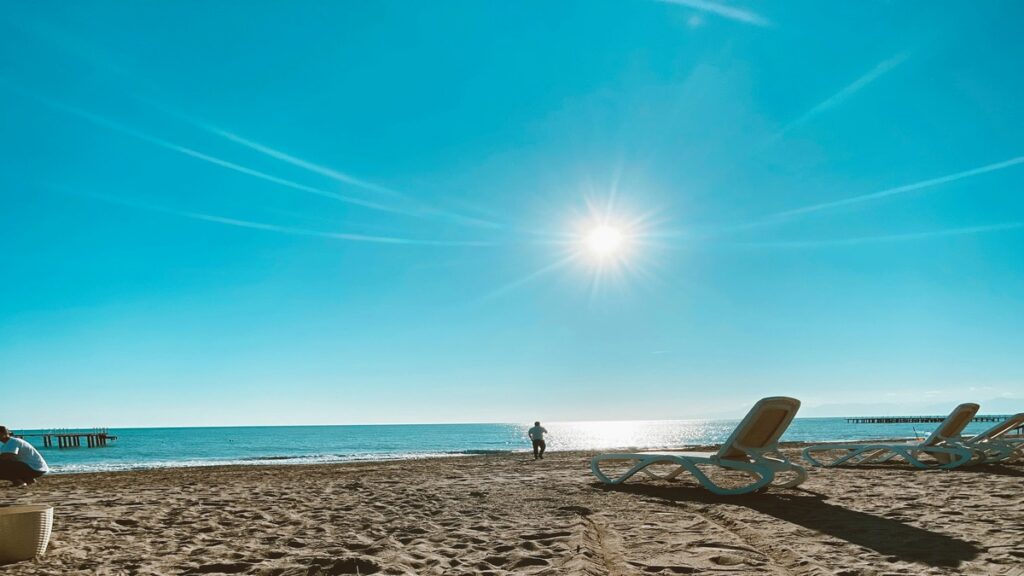
Most travellers check the temperature before heading out. Fewer check the UV index —and that’s a mistake that leads to sunburn, fatigue, and ruined travel days.
Here’s what UV index actually means, why it matters more than temperature, and how to use it to plan smarter trips.
What Is the UV Index?
The UV index is a scale that measures the strength of ultraviolet radiation from the sun at a specific location and time. It runs from 0 (no risk) to 11+ (extreme risk), and it tells you how quickly unprotected skin can be damaged.
The World Health Organization developed the scale so that people —travellers, athletes, outdoor workers —could make informed decisions about sun exposure regardless of where they are in the world.
| UV Index | Risk Level | Time to Burn (Fair Skin) | What to Do |
|---|---|---|---|
| 0–2 | Low | Over 60 minutes | No protection needed |
| 3–5 | Moderate | 30–45 minutes | Wear SPF 30+ |
| 6–7 | High | 15–25 minutes | SPF 50+, hat, shade |
| 8–10 | Very High | 10–15 minutes | Avoid midday sun |
| 11+ | Extreme | Under 10 minutes | Stay indoors 10am–4pm |
Why Temperature Is Not a Reliable Guide
This is the most important thing to understand: UV index and temperature are not the same thing.
You can have a UV index of 10 on a cool, partly cloudy day in the mountains. You can have a UV index of 3 on a hot, hazy day in a city. The two measurements are independent.
Travellers in places like New Zealand, South Africa, and at high altitudes are often caught out —the air feels cool, so they skip sunscreen. But the UV radiation is intense, and skin damage happens fast.
Cloud cover also doesn’t protect you as much as people assume. Light cloud reduces UV by only 10–20%. You can get badly burned on an overcast day if the UV index is high — a point that catches many travellers off guard in places like Dubai and Bali, where partly cloudy skies can still deliver UV 10+ at midday.
How UV Index Changes by Location and Season
Several factors affect how high the UV index reaches:
Latitude — The closer you are to the equator, the higher the UV. Cities like Singapore, Nairobi, and Bogotá regularly hit UV 11+ at midday. Dubai is another example —UV climbs to 10–11 from April through October, which the Dubai weather guide covers in full alongside what that means for when to visit.
Altitude — UV intensity increases by roughly 10% for every 1,000 metres of elevation. Skiing at 2,500 metres means UV exposure is about 25% higher than at sea level —even in winter.
Time of day — UV peaks between 10am and 2pm local time. Outside this window, UV drops significantly even on clear days.
Season — In the Northern Hemisphere, UV is highest June to August. In the Southern Hemisphere, highest December to February.
Reflection — Snow reflects up to 80% of UV radiation back at you. Sand reflects about 15%, water about 10%. This is why ski trips and beach holidays carry higher UV risk than the index alone suggests.
What to Do at Each UV Level
UV 0–2 (Low): No protection needed for most people. A good window for long outdoor walks without worrying about sun exposure.
UV 3–5 (Moderate): Apply SPF 30+ sunscreen if you’ll be outside for more than 30 minutes. Wear sunglasses. A hat helps.
UV 6–7 (High): SPF 30–50 sunscreen, reapply every 2 hours. Seek shade between 10am and 2pm. Cover up with light clothing if possible.
UV 8–10 (Very High): SPF 50+ essential. Minimise time in direct sun during peak hours. Wide-brimmed hat, UV-protective clothing, and wraparound sunglasses recommended.
UV 11+ (Extreme): Avoid direct sun exposure during midday hours. If you must be outside, maximum protection —full cover clothing, SPF 50+, hat, shade. Common in tropical destinations and high-altitude locations.
UV Index for Different Types of Travellers
Beach holidays: UV is almost always high near the equator. Check the UV index each morning, not just at the start of your trip. A UV 9 on day one can become UV 12 by day three as weather patterns shift. In Bali, for example, the dry season consistently brings UV 10–12 —the Bali weather by season guide shows exactly when UV risk peaks and how to plan around it.
Mountain trekking: Altitude amplifies UV significantly. Even at UV 6 in the valley, you may be experiencing the equivalent of UV 8–9 on the trail. Sunscreen on exposed skin —including ears, neck, and the back of hands —is essential.
City sightseeing: Concrete and glass buildings can reflect UV into shaded areas. Even in the shade of a city street, UV exposure can be meaningful on high-index days.
Winter travel: Many travellers completely skip sun protection in winter. But a UV index of 4 or 5 can still cause damage with prolonged outdoor exposure, especially in snow.
How to Check UV Index Before You Travel
The UV index is included in most modern weather forecasts. On WorldWeatherTime, you can search any city worldwide and see the current UV index alongside the day’s conditions. The activity planner also uses UV data when scoring whether conditions are suitable for outdoor travel or events.
A UV index of 8 or above triggers a specific alert in the travel and outdoor sections, so you always know when sun protection is non-negotiable.
The Bottom Line
The UV index is one of the most underused pieces of weather data available to travellers. It takes less than five seconds to check, and knowing it can save you from a painful sunburn that ruins the rest of your trip.
Check it every morning when you’re travelling. Treat anything above 6 as a signal to protect your skin. And remember —clouds don’t protect you nearly as much as you think they do.
Traveller Tip
UV index above 6 means you can burn in under 20 minutes —even on a cloudy day. Always check before outdoor activities, not just the temperature.
Sources
- World Health Organization —UV Index (who.int)
- Cancer Council Australia —UV Radiation
WorldWeatherTime shows live UV index for cities worldwide. Search any destination to see current conditions and get activity recommendations based on real-time weather data.
Check live UV index for your destination
Live conditions with global coverage