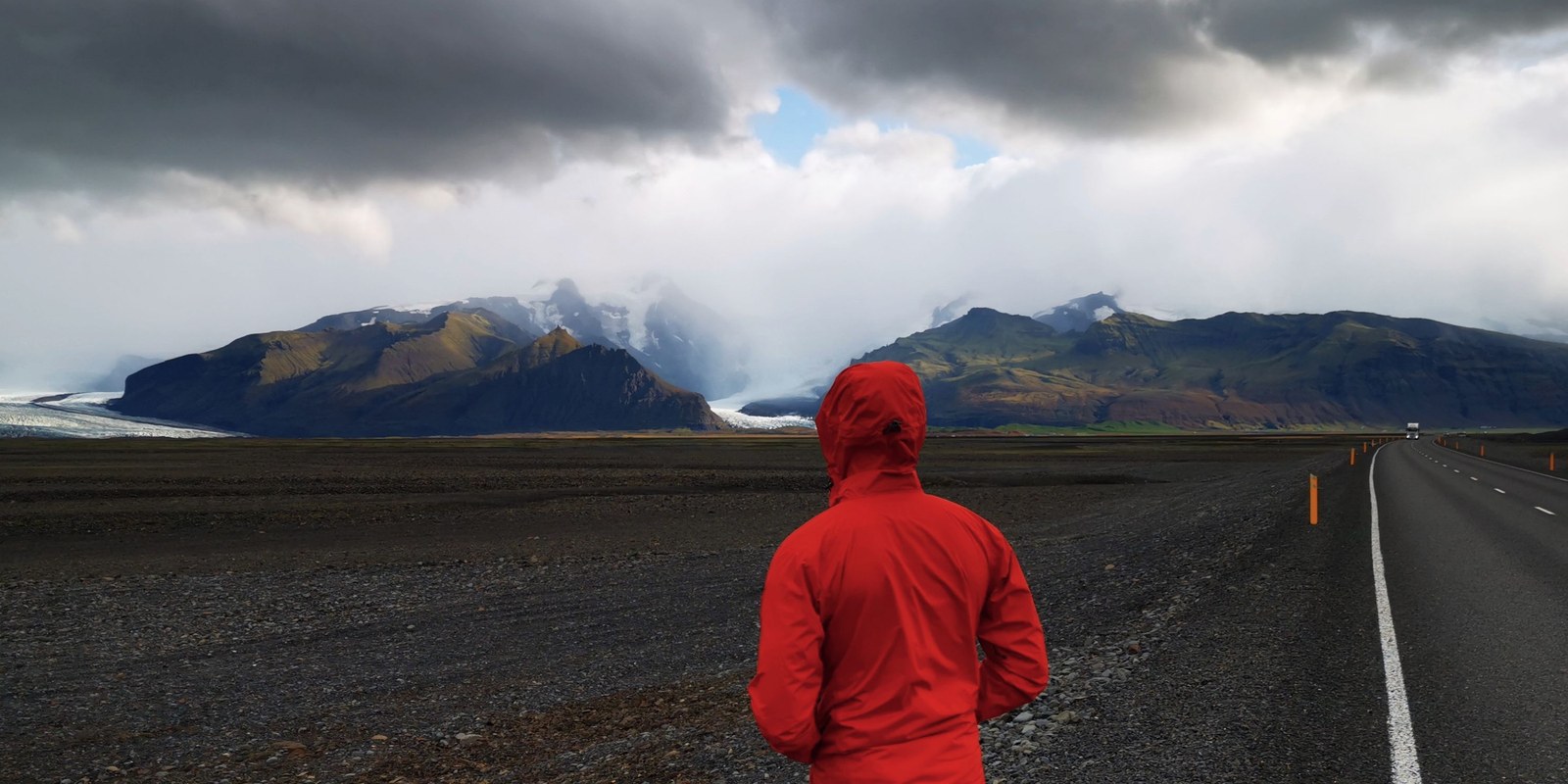
Most people pack for cold and rainy destinations as though the two problems were one. They are not. Cold on its own is straightforward — add insulation. Rain changes the arithmetic entirely, because wet clothing pulls heat from the body many times faster than dry clothing does. A thick coat that soaks through will leave you colder than a thin one that stays dry. This guide covers how to pack for cold and rainy trips as a series of decisions, driven by what the forecast actually says rather than by what the destination sounds like.
Why Cold and Rainy Is Harder Than Cold
Water carries heat away from the body far more efficiently than air does — which is why 8°C (46°F) and raining feels considerably worse than 2°C (36°F) and dry. Once a layer is wet, it stops insulating and starts actively cooling you, and it will keep doing so until it dries. In a damp climate at 5°C (41°F), that can take most of a day.
Wind compounds it. Moving air strips away the thin envelope of warmth your body maintains at the skin, and it does so much faster when that skin or clothing is already damp. This is why a windproof outer layer often matters more than a warmer jumper — a point covered in more detail in our explainer on wind speed and what the numbers mean.
Which gives the rule that shapes everything below: stay dry first, warm second. Insulation only works if it is dry.
The Three-Layer System
Almost every reliable cold-and-wet clothing setup is a version of the same three layers. Each has one job, and problems usually come from asking a layer to do a job it was not designed for.
| Layer | Its one job | Choose | Avoid |
|---|---|---|---|
| Base | Move sweat off the skin | Merino wool or synthetic, close-fitting | Cotton — holds water against you |
| Mid | Trap warm air | Fleece, or light synthetic insulation | One thick jumper you cannot adjust |
| Shell | Block rain and wind | Waterproof and breathable, taped seams, proper hood | Anything labelled only “water-resistant” |
| Extremities | Protect where heat is lost fastest | Hat, thin gloves, wool socks, waterproof footwear | Leaving these out to save space |
One rule does most of the work here: two thin mid layers beat one thick one. Cold and rainy days rarely hold a steady temperature, and two thin layers give you three configurations instead of two. They also pack flatter.
How to Pack for Cold and Rainy Destinations Using the Forecast
This is the step most packing lists skip. “Cold and rainy” covers everything from mild drizzle at 13°C (55°F) to sleet at 2°C (36°F) in a gale, and those two trips need different bags. Pack for the numbers, not the destination’s reputation.
| If the forecast shows | The real problem is | So pack |
|---|---|---|
| 10–15°C (50–59°F), light rain | Damp rather than cold | Shell plus one mid layer. An umbrella is genuinely useful here. |
| 5–10°C (41–50°F), steady rain | Wet clothing draining body heat all day | Full three layers, waterproof footwear, and more socks than you think |
| 0–5°C (32–41°F), rain or sleet | The hardest combination in travel weather | Insulated mid layer, taped-seam shell, hat and gloves — non-negotiable |
| Wind above 25 km/h (15 mph) | Wind chill, and umbrellas turning inside out | A windproof hooded shell. Leave the umbrella behind. |
| More than 10 mm of rain in a day | Everything soaks through eventually | Proper waterproofs over showerproof ones, plus a dry bag for electronics |
| Below 0°C (32°F) with precipitation | This is snow, not rain — a different problem | Prioritise insulation and dry footwear over waterproof ratings |
Two numbers are worth checking that most travellers never look at: daily rainfall in millimetres, and wind speed. Rainfall tells you whether you need showerproof or genuinely waterproof kit. Wind speed tells you whether an umbrella is equipment or dead weight — and, on colder days, how much the air will actually feel like. Pressure trends can hint at how settled the coming days will be, which our guide to air pressure and what it tells you explains in more detail.
Fabrics That Work, and Fabrics That Fail
Fabric matters more here than in any other weather, because the difference between materials only shows up once they are soaked.
- Cotton is the single most common packing error. It absorbs many times its weight in water, loses all insulating value when wet, and dries slowly — jeans, hoodies and socks alike.
- Merino wool insulates when damp and resists odour well enough to re-wear, cutting how much you carry. Slower to dry than synthetics, and pricier.
- Synthetics dry fastest and cost least, but hold smell sooner — pack one more than you would in merino.
- Down insulation is warm for its weight but collapses when wet and takes a long time to recover, unless it is hydrophobic-treated. In persistently wet climates, synthetic insulation is the safer choice.
- Footwear is where most trips are actually lost. Wet feet at 5°C (41°F) will end a day out faster than a thin coat. Waterproof shoes plus wool socks beat any amount of upper-body kit.
Waterproof Ratings, Decoded
Jacket labels quote two numbers, and knowing roughly what they mean prevents both under-buying and over-spending.
- Waterproofing (mm): how much water pressure the fabric resists before leaking. Around 5,000 mm copes with light rain; 10,000–15,000 mm handles steady rain; 20,000 mm and above is built for sustained downpours.
- Breathability (g/m²/24h): roughly 5,000 suits gentle sightseeing, 10,000–15,000 walking, 20,000 and above active hiking. Too little and you get wet from the inside instead.
- “Water-resistant” is not waterproof — treated but unrated, and it will wet through. Taped seams matter as much as the headline number, and the surface coating wears off: when rain stops beading, re-proof rather than replace.
What to Leave at Home
Packing well here is as much about subtraction as addition. These items most often travel unused — or actively make things worse.
- The umbrella, if wind is forecast above 25 km/h (15 mph). It will invert, it occupies a hand, and a hood does the job better.
- Jeans. Heavy, cold when wet, and slow to dry. One pair of quick-dry trousers replaces two pairs of jeans.
- A single thick winter coat. It cannot be adjusted, and if it soaks through you have no fallback.
- A third pair of shoes. One waterproof pair plus one dry indoor pair is almost always enough.
- Excess “just in case” clothing. Laundry exists nearly everywhere and merino re-wears well. Carrying less is warmer than carrying more, because you move more easily.
Traveller Tip
Check the weather twice. Look at monthly climate averages when you book, so you know roughly what to expect — then check the actual forecast 48 hours before you fly and adjust. That second check is what stops you carrying a week of cold-weather kit for a mild, drizzly trip, or arriving in sleet with only a showerproof jacket.
The Short Version
Stay dry first and warm second, because wet insulation does not insulate. Build three adjustable layers rather than one heavy one, and check rainfall and wind speed alongside temperature. Packing for the opposite extreme on the same trip? Our guide to travelling in a heatwave covers the other end of the scale.
WorldWeatherTime provides live conditions, rainfall, wind speed and 5-day forecasts for destinations worldwide — the full picture you need before you decide what to pack.