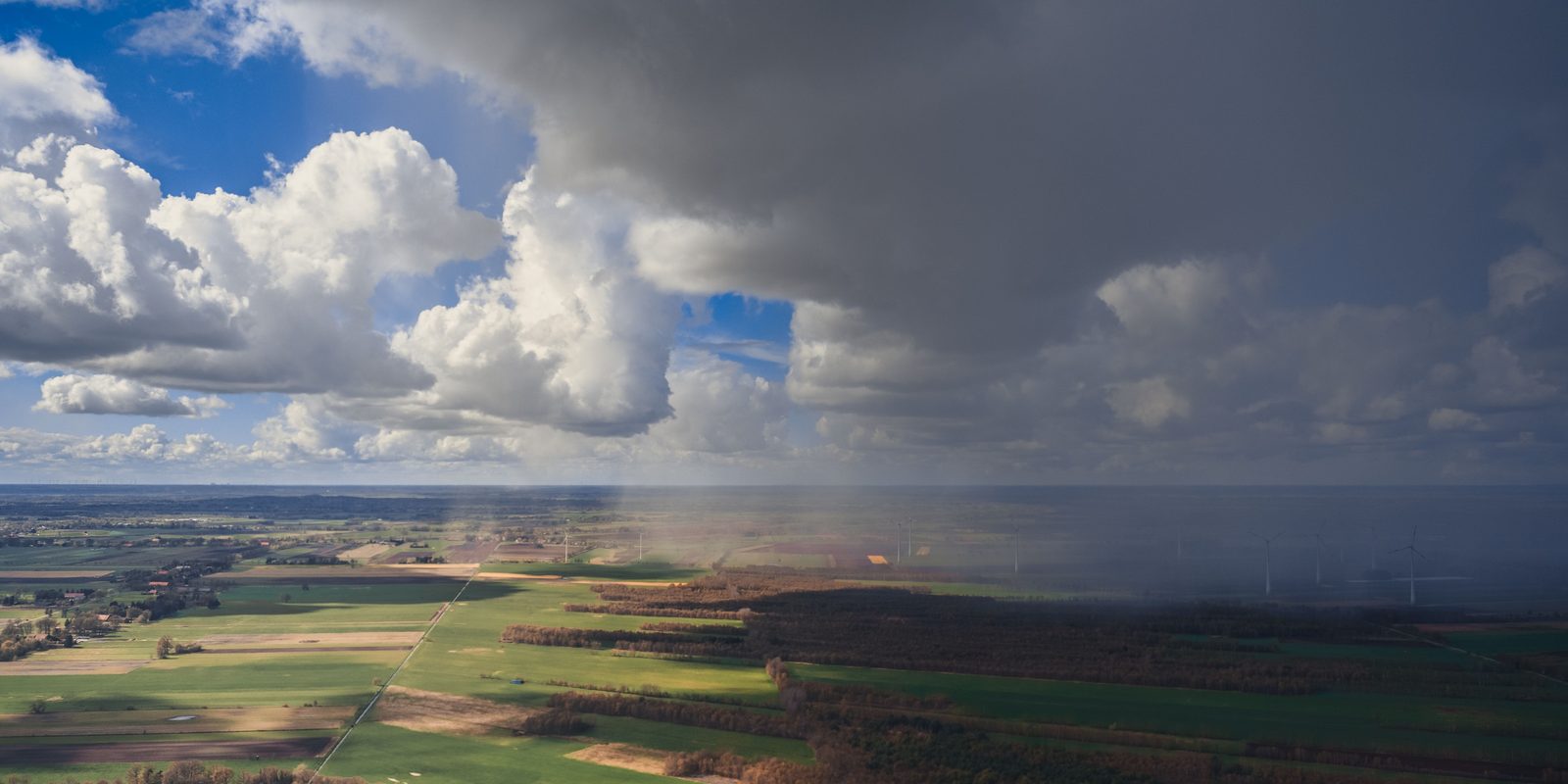
You’ve felt it even if you’ve never thought about it: your ears popping as the plane climbs, or as you drive up a mountain pass. That’s air pressure — the weight of the atmosphere pressing on you — changing around you. And the same invisible force that pops your ears is quietly one of the best weather forecasters there is.
Learn to read it, and you can often tell whether tomorrow brings sunshine or a soaking before the forecast even loads. Here’s what air pressure is, what high and low pressure actually mean, and how travellers can use it.
What Air Pressure Actually Is
Air has weight. The column of atmosphere above your head is constantly pressing down, and that force is what we call air pressure (or barometric pressure). At sea level it averages about 1,013 hPa — hectopascals, the same thing as millibars — which is also written as 29.92 inches of mercury on older barometers. Meteorologists measure it with a barometer, and because pressure changes with altitude, readings are always adjusted back to a sea-level equivalent so places can be compared fairly.
You don’t need the exact number. What matters for travellers is which way it leans — high or low — and, even more, which way it’s heading.
High Pressure vs Low Pressure — the Whole Game
Almost everything useful about air pressure comes down to this one distinction. In a high-pressure system, air is sinking, which warms it and stops clouds forming — so high pressure means settled, dry, calm weather. In a low-pressure system, air is rising; as it climbs it cools, moisture condenses into cloud, and you get rain, wind and storms. That’s the entire mechanism behind most of the weather you’ll travel through.
| High pressure | Low pressure | |
|---|---|---|
| Air movement | Sinking | Rising |
| Typical sky | Clear, blue | Cloudy, grey |
| Weather | Dry, settled, calm | Wet, unsettled, windy |
| Wind | Light | Stronger — often gusty |
| For your trip | Reliable outdoor days | Pack a waterproof, plans may shift |
This is also why low pressure and wind go together: the bigger the pressure difference between neighbouring systems, the harder the air rushes between them.
The Real Skill: Watch Which Way It’s Moving
Here’s the part sailors and pilots have relied on for centuries. A single pressure reading is far less useful than the trend. A barometer that’s rising signals improving, fairer weather on the way. A barometer that’s falling means conditions are deteriorating — and a rapid drop is the classic warning of an approaching storm or front. Steady pressure means little change.
So if you’re watching a forecast and the pressure is sliding lower over the next couple of days, that’s your cue the weather is turning, even if right now the sky looks fine. It’s exactly the kind of signal that makes a forecast more readable once you know what to look for — and a reminder of why forecasts get less certain the further out they go.
Why Your Ears Pop — the Altitude Connection
Pressure doesn’t just vary with the weather; it drops steadily as you climb, because there’s less atmosphere left above you. By about 5,500 metres (18,000 ft) you’re already above roughly half the atmosphere — which is why the summit of a high peak has far thinner air than the coast. On Denali in Alaska, the pressure is about half what it is in Honolulu.
Your ears pop because the air pressure sealed inside your middle ear no longer matches the pressure outside as you change altitude — on a plane, a mountain road, or a fast lift. Swallowing, yawning or chewing gum opens the tubes that let the two equalise. It’s the same physics as the weather, just felt from the inside: on aircraft, cabins are pressurised precisely so the change your body has to cope with stays manageable.
Air Pressure and the Big Storms
The lower the pressure, the more violent the weather can get. Ordinary systems sit somewhere between about 965 and 1,040 hPa, but the centre of a powerful hurricane or typhoon can plunge far below that — one 1979 Pacific typhoon recorded an extraordinary 877 hPa. As a rule of thumb, the deeper the low, the more intense the storm, which is why forecasters watch central pressure so closely when a tropical system is approaching a coast.
TRAVELLER TIP
Don’t chase the exact pressure number — watch the arrow. On your trip, if the barometer (shown in most weather apps) is falling over a day or two, treat it as an early warning that the weather is about to turn, and shuffle your outdoor plans earlier. If it’s rising, better days are usually coming. And for the ear-popping: swallow, yawn or chew gum on ascent and descent, and keep babies feeding, so the pressure equalises comfortably.
Sources
- NOAA — Air Pressure / JetStream (noaa.gov)
- National Geographic — Atmospheric Pressure (education.nationalgeographic.org)
- World Meteorological Organization — pressure systems (wmo.int)
- UK Met Office — pressure and weather (metoffice.gov.uk)
WorldWeatherTime shows live conditions and multi-day outlooks for cities worldwide — so you can spot the pressure trend turning before it reaches your destination.
Watching the weather turn?
Check live conditions and the days-ahead outlook for any city