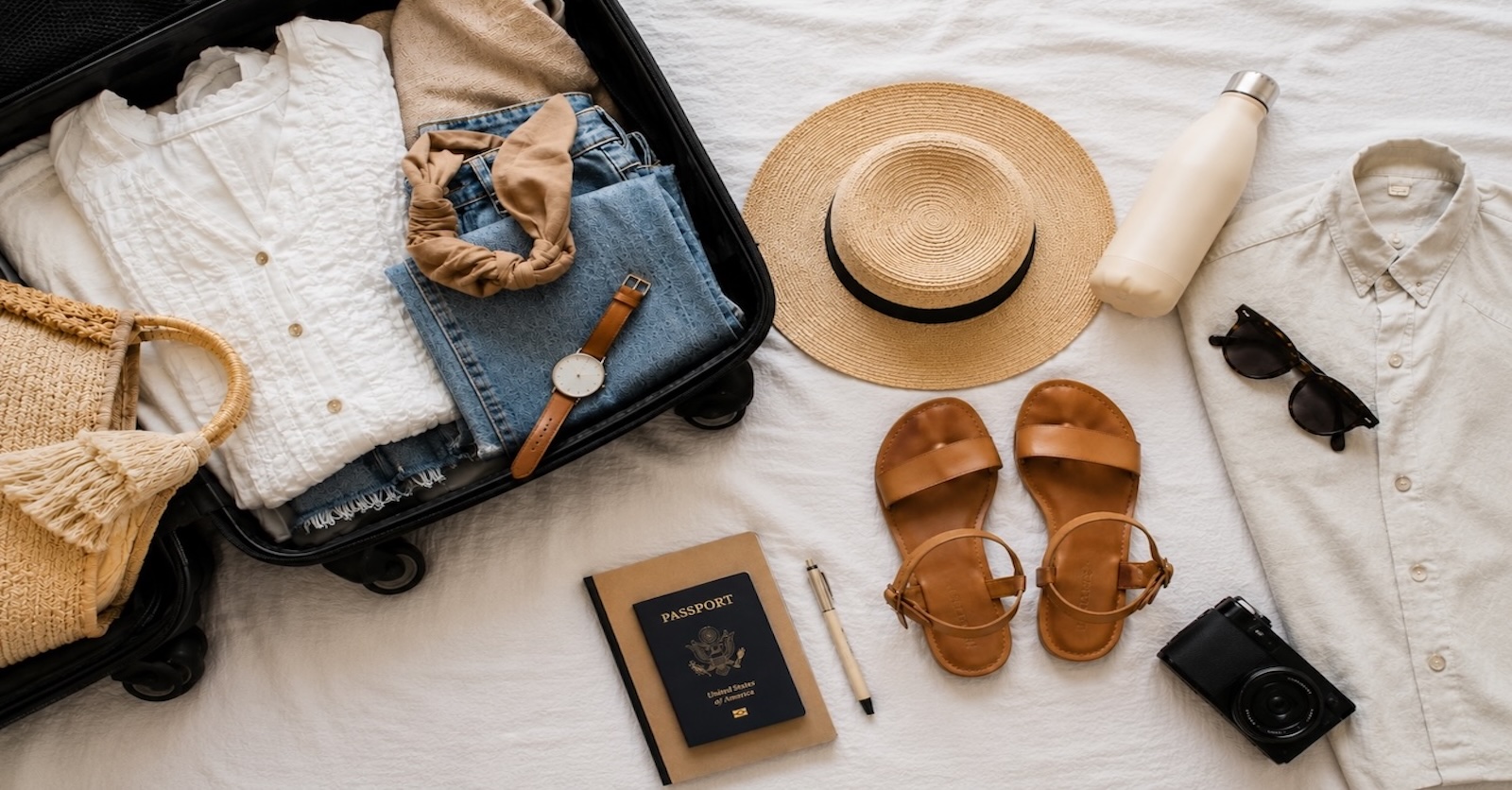
Packing for hot weather sounds simple — until you’re sweating through the wrong clothes at 35°C with a bag full of things you never touched. The problem isn’t usually what people forget to pack. It’s what they pack too much of, and what they assume they won’t need.
Whether you’re heading to a Mediterranean beach, exploring a sun-baked city, or hiking in the heat, the principles are the same: lightweight, breathable, and nothing that doesn’t earn its place. This list covers the essentials that apply to any hot weather trip, followed by what you’ll need for the three most common summer travel activities.
Core Hot Weather Essentials
These are the non-negotiables regardless of where you’re going or what you’re doing. Get these right and everything else becomes easier.
Clothing
The single most important rule for hot weather packing: choose fabric over fashion. Linen and moisture-wicking synthetics outperform cotton in heat — cotton absorbs sweat and stays damp, while linen and technical fabrics dry fast and feel better against the skin all day. Stick to light colours, which reflect rather than absorb heat. Plan to change more often than you would on a cooler trip — heat and sweat mean you’ll go through clothes faster than expected, so pack accordingly for the length of your stay.
| Item | Why It Matters |
|---|---|
| Lightweight t-shirts | Linen or moisture-wicking — not cotton |
| Shorts or lightweight trousers | Linen trousers double as smart-casual for evenings |
| Light long-sleeved layer | Essential for heavily air-conditioned restaurants and transport |
| Wide-brim sun hat | Protects face and neck — more effective than SPF alone |
| Sunglasses (UV400) | Polarised lenses reduce glare significantly near water |
| Comfortable sandals | Worn-in before the trip — blisters in heat are miserable |
Sun and Heat Protection
Most people pack sunscreen but underestimate how much they’ll use. A standard 200ml bottle lasts roughly three days of full-body application. For a week in the sun, bring more than you think you need — or plan to buy locally, keeping in mind that sunscreen is significantly more expensive in tourist areas.
| Item | Notes |
|---|---|
| Sunscreen | Choose SPF based on the UV index at your destination — SPF 30+ for moderate conditions, SPF 50+ for high UV and above. Reapply every 2 hours, and immediately after swimming or heavy sweating |
| Lip balm with SPF | Frequently forgotten, always regretted |
| Reusable water bottle (1L+) | Insulated keeps water cold for hours in 35°C heat |
| After-sun lotion | Even with sunscreen, cumulative sun exposure adds up over a week |
| Electrolyte sachets | Sweat depletes salt and minerals — water alone isn’t always enough |
Beach and Resort Packing List
Beach holidays have a specific rhythm: morning at the beach, afternoon rest during peak heat (12–3pm is brutal in most hot-weather destinations), evening out for dinner. Pack for that pattern rather than for every possible scenario.
| Item | Notes |
|---|---|
| Swimwear | Bring more than one set so one can dry while you wear the other |
| Beach cover-up or sarong | Required for entering shops, restaurants and some sites |
| Microfibre towel | Dries in minutes, takes up almost no space |
| Reef-safe sunscreen | Required at many protected beaches — worth checking before you go |
| Waterproof phone pouch | Sand and saltwater destroy phones — don’t risk it |
| Flip flops / waterproof sandals | Separate from your walking sandals — sand ruins everything |
| One smarter outfit for evenings | A lightweight dress or linen shirt — beach resorts still have dress codes |
City Sightseeing in Hot Weather
Hot city breaks have one enemy that beach trips don’t: pavement. Cobblestones, marble squares, and concrete absorb heat all day and radiate it back at you from below. Footwear becomes critical. The other hidden challenge is air conditioning — European museums, restaurants, and metro systems are often aggressively cold indoors, which means going from 38°C outside to 18°C inside repeatedly.
| Item | Notes |
|---|---|
| Broken-in walking shoes | 10,000+ steps daily on hard surfaces — comfort is non-negotiable |
| Lightweight daypack | Carries water, camera, layer — keeps hands free all day |
| Light scarf or shawl | Covers shoulders for religious sites, doubles as warmth for AC |
| Handheld fan or small USB fan | A traditional folding fan weighs nothing and works anywhere — no charging needed. A small USB fan is useful for hotel rooms without AC. Both are worth considering for destinations above 35°C |
| Power bank | Heat drains phone batteries faster — maps and tickets are on your phone |
| Anti-chafe balm | Hours of walking in heat and humidity — thigh chafing is real and painful |
Hot Weather Hiking and Trekking
Hiking in heat is categorically different from hiking in temperate conditions. The margin for error is smaller — dehydration, heat exhaustion, and sunstroke can develop faster than most people expect, especially at altitude where UV intensity increases. The kit below isn’t optional extras — it’s the difference between a great day out and a medical situation.
| Item | Notes |
|---|---|
| Moisture-wicking hiking shirt | Long sleeves protect better than sunscreen on exposed ridges |
| Lightweight hiking trousers | Zip-off legs give flexibility as temperature changes with altitude |
| Trail shoes or hiking boots | Ankle support matters on uneven terrain in any temperature |
| Hydration pack (2L+) | You need around 500ml per hour of hiking in heat — plan accordingly |
| Electrolyte tablets | Non-negotiable on multi-hour hikes — pure water isn’t enough |
| Lightweight emergency layer | Summit temperatures can drop 15°C below trailhead — always carry one |
| Blister plasters | Heat and sweat accelerate friction — treat early before they worsen |
| Headlamp | Start early to avoid midday heat — you may finish after dark |
What to Leave Behind
Overpacking for hot weather is one of the most common travel mistakes — and the most punishing, because you’re carrying that extra weight in heat. These are the items most frequently packed and least frequently used on hot weather trips:
Jeans — heavy, slow to dry, uncomfortable above 28°C. One pair of lightweight trousers does everything jeans would do and weighs half as much. A full hairdryer — almost every hotel has one, and the humidity means your hair dries fast anyway. More than one pair of trainers — one pair of broken-in walking shoes handles 95% of what you’ll encounter. A heavy jacket — a lightweight packable layer handles the air conditioning problem without the bulk. Too many shoes — sandals, walking shoes, and one smarter pair is the maximum most people need.
TRAVELLER TIP
Before your trip, check the actual forecast for your destination — not just the average temperature. A week at 38°C with high humidity packs very differently to a week at 32°C with sea breezes. Check the UV index too — it tells you exactly which SPF to pack. Check live conditions, UV index, humidity, and hourly forecasts for your destination so you know exactly what to expect before you zip up the bag.
Sources
- NHS — Heat exhaustion and heatstroke: symptoms and prevention (nhs.uk)
- World Health Organization — Heat and health guidance (who.int)
- REI Co-op — Hot weather hiking tips and gear guide (rei.com)
- American Academy of Dermatology — Sunscreen FAQs (aad.org)
WorldWeatherTime provides live conditions, UV index, humidity and 5-day forecasts for cities worldwide. Search your destination to pack smarter around the weather.
Check the forecast before you pack
Live temperature, UV index, humidity and hourly forecast for any destination