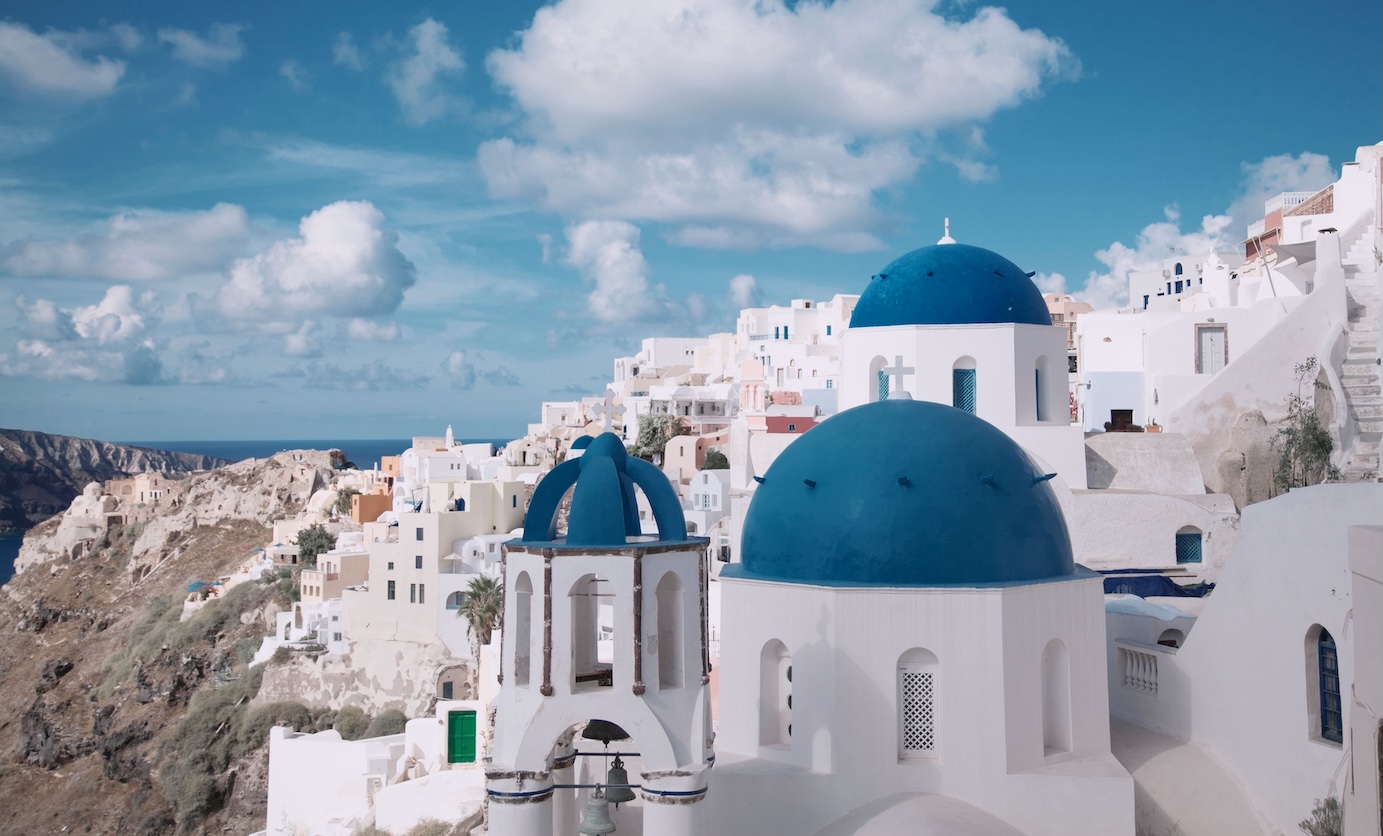
Santorini is one of those places where the weather feels almost too good to be true — barely any rain, warm seas, and sunshine from April through October. But the island has a weather secret that catches almost every first-time visitor off guard: the Meltemi. Getting the timing right changes everything.
Santorini sits in the southern Aegean, part of the Cyclades island group, and has one of the driest climates in Greece. The entire island receives only around 350–400mm of rain per year — roughly half what London sees in an average year — and nearly all of it falls between November and February. From May to September, rain is essentially a myth.
Santorini Weather at a Glance
| Month | Avg Temp | Avg Rain Days | Avg Sea Temp | Verdict |
|---|---|---|---|---|
| January | 12°C / 54°F | 10–12 | 16°C / 61°F | Quiet, cheap, wet |
| February | 12°C / 54°F | 9–11 | 16°C / 61°F | Coldest month, very quiet |
| March | 14°C / 57°F | 7–9 | 16°C / 61°F | Warming up, uncrowded |
| April | 17°C / 63°F | 3–5 | 17°C / 63°F | Pleasant, quiet, good value |
| May | 21°C / 70°F | 1–3 | 20°C / 68°F | Excellent — warm, dry, manageable crowds |
| June | 25°C / 77°F | 0–1 | 23°C / 73°F | Near-perfect — hot, dry, still manageable |
| July | 27°C / 81°F | 0–1 | 25°C / 77°F | Peak heat — Meltemi winds, very busy |
| August | 27°C / 81°F | 0–1 | 26°C / 79°F | Hottest, busiest — warmest sea |
| September | 24°C / 75°F | 1–2 | 25°C / 77°F | Best month — warm, quieter, warm sea |
| October | 22°C / 72°F | 2–4 | 23°C / 73°F | Excellent — warm, affordable, uncrowded |
| November | 17°C / 63°F | 6–8 | 21°C / 70°F | Quietening down, first rains |
| December | 14°C / 57°F | 10–12 | 18°C / 64°F | Wet, mild, very quiet |
The Meltemi — Santorini’s Best-Kept Weather Secret
Most travel guides mention Santorini’s famous sunsets and iconic caldera views. Few mention the Meltemi — and it’s arguably the most important weather factor on the island in summer.
The Meltemi is a strong, dry northerly wind that sweeps across the Aegean from June through August, with July and August seeing the strongest and most persistent gusts — regularly reaching 40–60 km/h and occasionally stronger. It makes the summer heat feel more bearable than the temperature suggests, but it also cancels ferry connections, disrupts catamaran tours, and can make exposed clifftop locations like Oia genuinely uncomfortable for extended periods.
The eastern beaches (Perissa, Kamari) are more sheltered from the Meltemi than the caldera-facing west side of the island. If beach time is the priority and you’re visiting in July or August, the east coast will feel significantly calmer.
Spring (April–May): The Insider’s Window
Spring is when Santorini belongs to people who’ve done their research. April and May offer warm temperatures (17–21°C), almost no rain, and crowds that haven’t yet reached their summer intensity. The caldera views from Oia and Fira are unobstructed, restaurants have their full menus open, and hotel prices are noticeably lower than peak season.
The sea is still cool in April (around 17°C) — swimmable for the determined but not warm enough for most. By May it reaches 20°C and the first proper beach days begin. Best for: couples, photographers, first-time visitors, anyone who wants the full Santorini experience without the July chaos.
Summer (June–August): Hot, Iconic, and Relentless
June is widely considered Santorini’s sweet spot — temperatures reach 25°C, the sea is warm (23°C), rain is essentially zero, and the island is busy but not yet overwhelmed. It’s the month locals and repeat visitors tend to recommend most strongly.
July and August bring the full peak season experience: 27°C heat, Meltemi winds, packed sunsets at Oia, and prices at their highest. The sea reaches 25–26°C — ideal for swimming — but booking accommodation, restaurants, and boat tours well in advance is essential. Some years the Meltemi is barely noticeable; other years it dominates for days at a time. There’s no predicting it in advance. Best for: beach holidays, nightlife, bucket-list sunsets — with advance planning and realistic expectations about crowds.
Autumn (September–October): Santorini Weather at Its Best
Santorini weather in September is about as good as the island gets: average highs around 24°C (75°F), the sea at its warmest of the year at 25°C (77°F), only one or two rain days across the whole month, and the Meltemi wind fading after its summer peak. The one real change from August is the crowds — once the European school holidays end they thin noticeably, prices ease, and the island feels calmer without losing any of the warmth.
September is arguably Santorini’s finest month. The sea is at its warmest (25°C), the Meltemi has faded, temperatures drop slightly from the August peak to a very comfortable 24°C, and the crowds thin noticeably after the European school holidays end. Prices begin to ease and the island takes on a more relaxed, authentic atmosphere.
October is one of the most underrated months on the entire island. Daytime temperatures still reach 22°C, the sea stays warm at 23°C, rain is rare (only 2–4 days), and prices are significantly lower than summer. The sunsets are still spectacular. It’s the month that tends to convert visitors into repeat travellers. Best for: couples, budget-conscious travellers, repeat visitors, anyone who values comfort over calendar status.
Festivals and Local Events Worth Timing For
Santorini’s event calendar is modest compared to larger Greek islands, but a few occasions are genuinely worth planning around. Greek Orthodox Easter — which falls in April or May depending on the year — is celebrated with exceptional atmosphere on the island. The candlelit midnight procession through Fira is one of the most moving Easter traditions in Greece, and the island still feels intimate at that time of year.
The Santorini Jazz Festival takes place each June, drawing international artists to open-air venues overlooking the caldera — one of the more atmospheric music settings anywhere in the world. The Ifestia Festival in August is a theatrical event commemorating the island’s volcanic past, complete with fireworks over the caldera that recreate the ancient eruption. It’s spectacular but coincides with peak crowds and prices. For culture seekers who want both events and breathing room, June gives you the Jazz Festival without the August intensity. Best for: culture seekers, couples, anyone who wants more than just a beach holiday.
Winter (November–March): A Different Island
Winter Santorini is a genuinely different experience. Many hotels, restaurants and tour operators close from November through March, and the island population drops dramatically. What remains is the volcanic landscape at its most dramatic — stark white villages against dark skies, empty caldera paths, and a sense of place that summer visitors never see.
Temperatures are mild by most European standards (12–14°C) but rain increases significantly, with December and January seeing 10–12 rainy days each. Snow is rare but not unheard of — Santorini was briefly dusted white in February 2008, one of the island’s most photographed winters. Best for: photographers, travellers seeking authenticity, anyone on a tight budget.
TRAVELLER TIP
If your dates are flexible, September is the single best month to visit Santorini — warm sea, fading crowds, and lower prices than August. If you’re visiting in July or August, book ferries, sunset restaurants in Oia, and boat tours at least 2–3 months in advance. The Meltemi can cancel last-minute plans without warning.
Sources
- Climate-Data.org — Santorini monthly climate averages (climate-data.org)
- Weather Atlas — Santorini climate and monthly weather data (weather-atlas.com)
- Greeka — Santorini weather by month (greeka.com)
- Climates to Travel — Santorini seasonal climate overview (climatestotravel.com)
- Hellenic National Meteorological Service — Aegean climate data (hnms.gr)
WorldWeatherTime shows live Santorini weather, sea temperature and hourly forecasts — so you always know what conditions to expect before you arrive.
Check live weather in Santorini right now
Real-time conditions, sea temperature and hourly forecast